Balancing Live Football Markets with Casino Crossovers Under Swiss Oversight Rules
Geschrieben von Willa Roth · 24.8.2026
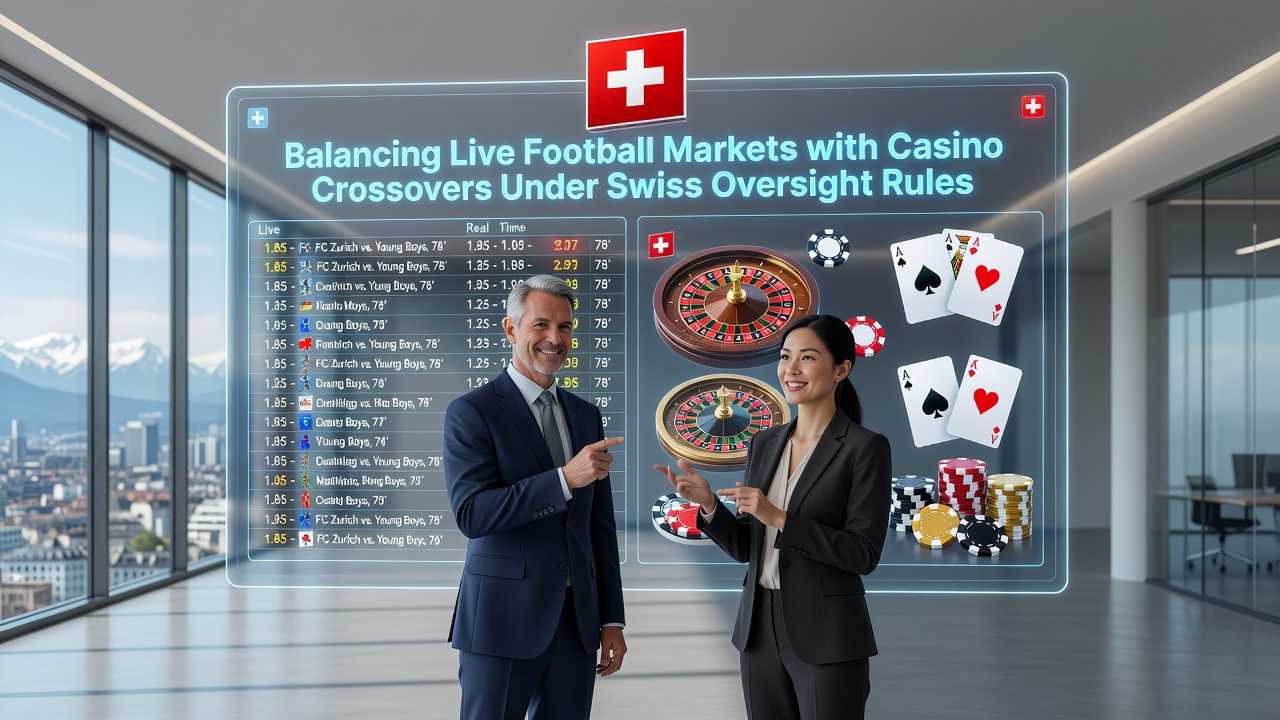
Balancing Live Football Markets with Casino Crossovers Under Swiss Oversight Rules
Swiss gambling regulations separate sports betting from casino operations yet allow licensed operators to integrate live football markets with casino-style products under strict compliance conditions, and data from the Federal Gaming Board shows that these crossovers require continuous monitoring to maintain player protection standards while operators adjust odds in real time during matches.
Live football betting involves rapid shifts in odds as events unfold on the pitch, and Swiss rules require platforms to process these changes through approved systems that prevent unauthorized market manipulation, while casino crossovers add layers such as integrated live dealer tables or slot bonuses tied to match outcomes that must align with the same transparency requirements.
Swiss Regulatory Structure for Mixed Gambling Products
The Federal Act on Gambling, enacted in 2019 and enforced through the Swiss Gambling Supervisory Authority, mandates separate licensing for sports betting and casino activities, although operators can offer both under one roof provided they maintain distinct risk controls and reporting channels, and figures from 2025 indicate that more than 60 licensed entities now handle combined portfolios with quarterly audits that track crossover activity.
Those who study Swiss oversight note that casino products receive different taxation and player age verification protocols than football betting, yet crossover features such as loyalty points earned from live goals that convert into casino spins create audit trails that authorities review for fairness, and compliance teams use automated alerts to flag unusual betting patterns that span both verticals.
Live Football Market Mechanics Under Oversight
Operators must submit in-play betting algorithms for pre-approval, and these systems recalculate odds based on possession statistics, injuries, and weather data while remaining within Swiss-defined volatility thresholds, and research from the University of Lausanne highlights how these thresholds reduce extreme swings that could disadvantage players during high-stakes matches in the Swiss Super League.
August 2026 brings updated reporting deadlines for real-time data feeds, requiring operators to archive every odds adjustment with timestamps that regulators can access within 24 hours, and this change aligns with broader European efforts to standardize live market transparency across borders.
Casino Crossover Features and Compliance Requirements
Casino crossovers appear in forms such as goal-triggered bonus rounds or accumulator bets that unlock free casino credits, yet Swiss rules prohibit direct linkage between live football results and casino game outcomes to avoid creating hybrid games that bypass casino licensing categories, and industry reports from the European Betting and Gaming Association document how operators use separate software modules to enforce this separation.

Player funds remain segregated between betting wallets and casino wallets even during crossover promotions, and audits verify that promotional mechanics do not encourage excessive play across both products, while data from the Swiss Federal Statistical Office reveals a 12 percent rise in crossover usage between 2024 and 2025 without corresponding increases in problem gambling reports when responsible gaming tools stay active.
Risk Management and Player Protection Measures
Operators deploy unified dashboards that monitor total exposure across football markets and casino sessions, and these tools trigger automatic session limits when combined activity exceeds thresholds set by Swiss guidelines, and observers note that such integrated monitoring reduces the potential for players to chase losses from one vertical into the other.
External verification comes from independent testing labs that certify random number generators for casino elements and odds fairness engines for football markets, and a 2025 study by the Canadian Centre for Gaming Research examined similar crossover models in regulated markets and found that mandatory cooling-off periods between verticals improved player retention of responsible habits.
Operational Adjustments Ahead of August 2026
License holders prepare for new data-sharing protocols scheduled for August 2026 that will connect sports betting platforms directly with casino supervision systems, allowing authorities to detect coordinated promotional campaigns that might otherwise evade single-vertical scrutiny, and early pilots show these connections cut compliance review times by nearly 30 percent.
Training programs for compliance officers now include modules on crossover risk indicators, such as sudden spikes in football betting volume followed by casino deposits, and these programs draw on case examples from Australian regulatory reviews that identified similar patterns in multi-product environments.
Conclusion
Swiss oversight continues to evolve its approach to live football markets and casino crossovers through precise licensing distinctions, real-time reporting upgrades, and integrated player protection tools, and the framework set for August 2026 reinforces these elements by tightening data connections while preserving the separation required by law, which allows operators to innovate within clearly defined boundaries.