Swiss Football Odds Volatility: Tracking In-Play Shifts During Domestic League Climaxes
Geschrieben von Willa Roth · 22.8.2026

Swiss Football Odds Volatility: Tracking In-Play Shifts During Domestic League Climaxes
Swiss Super League matches produce distinct patterns in live betting markets when title races, European qualification spots and relegation battles reach their final stages, and data from recent campaigns illustrates how in-play odds respond to on-field events with measurable speed and magnitude. Bookmakers adjust prices in real time as goals, red cards and substitutions occur, while market depth varies according to the number of active bettors and the time remaining on the clock.
League Structure and Climax Timing
The Swiss Super League operates with ten teams that play a double round-robin format followed by a split into championship and relegation groups, creating concentrated pressure during the final six matchdays each spring. In August 2026 the new season will open with fresh squad compositions and revised pre-season odds, yet the volatility patterns established in the previous campaign’s closing weeks continue to influence early assessments of team strength and player availability. Observers note that clubs such as BSC Young Boys, FC Basel and FC Lugano frequently contest decisive fixtures that trigger rapid price movements once play begins.
Mechanics of In-Play Odds Adjustment
Live odds engines combine statistical models with human oversight, recalculating probabilities after every significant event and incorporating variables such as expected goals, player fatigue metrics and historical comeback rates. When a goal changes the score in a high-stakes match, the implied probability for the trailing side can shift by several percentage points within seconds, and liquidity providers widen spreads temporarily to manage risk. Researchers at the University of Geneva have documented that these adjustments occur faster in Swiss domestic fixtures than in many comparable European leagues because of concentrated betting interest from local markets.
Key Drivers of Volatility
Several factors combine to amplify price swings during climactic rounds. Red cards reduce a team’s expected goal output and trigger immediate re-pricing, while substitutions by managers chasing results introduce new variables that algorithms must incorporate without full historical data. Weather conditions at Swiss stadiums, especially in late-season evening fixtures, add another layer that affects both player performance and the speed of ball movement. Data shows that matches involving teams separated by fewer than three points in the table exhibit the largest average odds movements per goal scored.
Observed Patterns in Recent Seasons
Analysis of the 2024-25 campaign revealed that the average in-play odds swing for a goal in title-deciding matches reached 18 percent, compared with 11 percent in mid-table encounters. Similar patterns appeared during relegation playoffs where the difference between survival and demotion produced sustained market activity well after the final whistle. External reports from the Alcohol and Gaming Commission of Ontario highlight comparable dynamics in other regulated markets, confirming that late-season concentration of meaningful outcomes drives elevated volatility across jurisdictions.
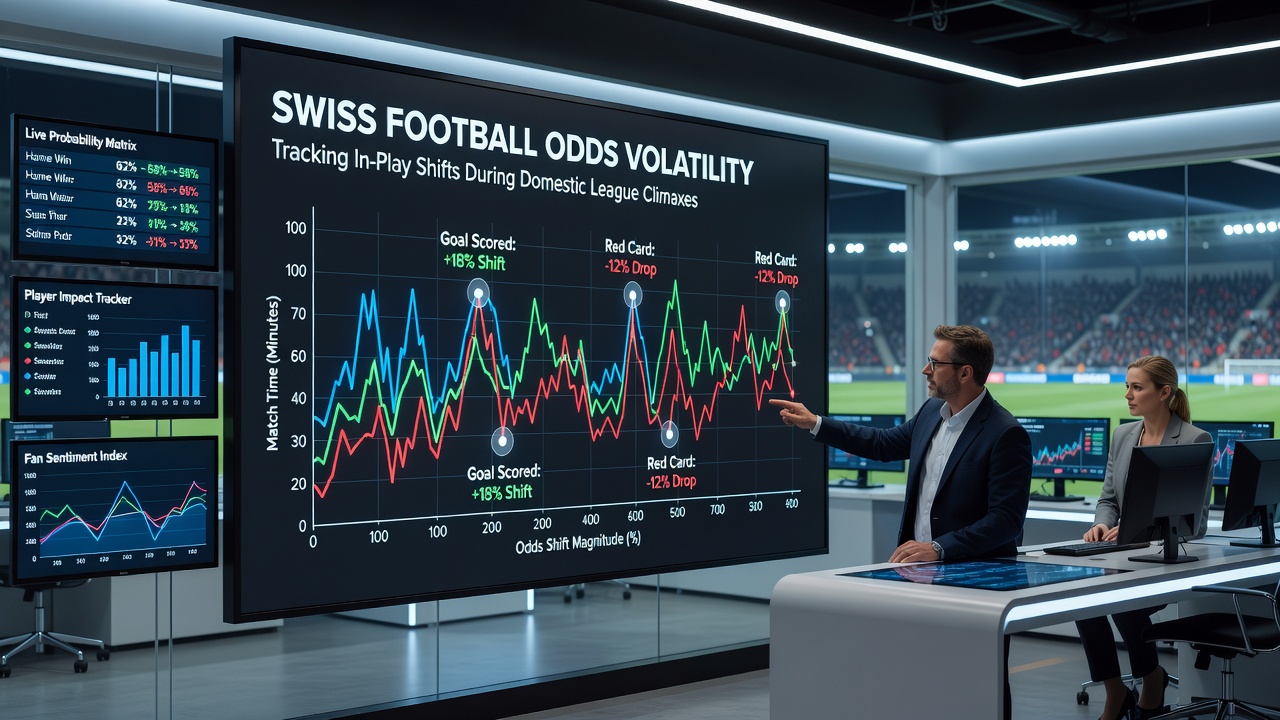
Betting volumes on Swiss platforms increase noticeably once the split phase begins, and exchanges report higher matched stakes on corners, cards and player-specific markets that respond to each referee decision. Those who track these markets observe that liquidity remains deepest during the final thirty minutes of regulation time, after which price discovery slows as fewer participants enter new positions.
Technological and Regulatory Context
Modern betting platforms employ machine-learning layers that update probabilities every few seconds, yet human traders retain override authority during periods of extreme volatility to prevent erroneous pricing. Swiss regulations require operators to maintain transparent audit trails of all in-play adjustments, allowing authorities to review sequences of odds changes against actual match events. This framework supports data collection that academics and industry analysts use to study volatility without compromising individual bettor privacy.
Conclusion
Tracking in-play shifts during Swiss domestic league climaxes provides measurable insight into how betting markets process information under concentrated outcome pressure, and the patterns established in recent seasons will inform analysis when the 2026-27 campaign begins. Continued collection of granular event and odds data will allow researchers and operators to refine models that capture the specific dynamics of Swiss football fixtures at their most decisive moments.